
What Does Artificial Intelligence Mean in English?,Demystifying AI: Understanding the Concept of Artificial Intelligence in English
Artificial Intelligence (AI) refers to the simulation of human intelligence in machines that are programmed to think like humans and mimic their actions. It encompasses technologies like machine learning, natural language processing, and robotics, aiming to create systems capable of performing tasks requiring human intelligence.
Artificial Intelligence, or AI, is a term that has become increasingly prevalent in our daily lives, as technology continues to advance at a rapid pace. But what exactly does the term "artificial intelligence" mean in English? To understand this, we must delve into its origins, definitions, and the various aspects of AI that shape our modern world.
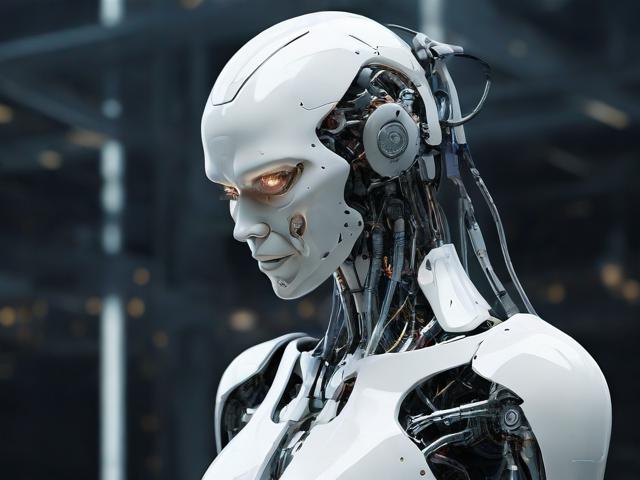
The term "artificial intelligence" was first coined by John McCarthy, a computer scientist, in 1956. It refers to the simulation of human intelligence in machines that are programmed to think like humans and mimic their actions. In English, "artificial" means something that is made by humans, as opposed to something that occurs naturally. "Intelligence," on the other hand, is the ability to acquire and apply knowledge and skills.
At its core, artificial intelligence is about creating systems that can perform tasks that would typically require human intelligence. These tasks can range from simple ones, such as recognizing images or understanding natural language, to complex ones, such as driving a car or diagnosing diseases.
There are several types of artificial intelligence, each with its own characteristics and capabilities:
1、Narrow AI (Weak AI): This is the most common form of AI and refers to systems designed to perform a specific task. Examples include speech recognition software, recommendation algorithms, and chess-playing programs. Narrow AI is focused on a single domain and lacks the ability to generalize beyond its specific task.
2、General AI (Strong AI): General AI is a hypothetical form of AI that would possess the same intelligence as humans or surpass it. It would be capable of understanding, learning, and performing any intellectual task that a human can. As of now, General AI is purely theoretical and remains a topic of research and debate.
3、Superintelligent AI: This is a concept that goes beyond General AI. Superintelligent AI would be so advanced that it would outperform humans in all intellectual tasks, potentially surpassing human creativity, problem-solving abilities, and even emotional intelligence. The implications of such an AI are vast and often a subject of speculation and concern.
The field of artificial intelligence can be further divided into several subfields, each focusing on different aspects of AI development:
1、Machine Learning: This is a subset of AI that involves the development of algorithms that can learn from and make predictions or decisions based on data. Machine learning is responsible for many of the advancements in AI, such as image recognition, natural language processing, and autonomous vehicles.
2、Deep Learning: Deep learning is a specialized subset of machine learning that uses neural networks with many layers to learn complex patterns in data. It has been particularly successful in areas such as image and speech recognition.
3、Natural Language Processing (NLP): NLP is the field of AI that focuses on the interaction between computers and humans through natural language. It enables machines to understand, interpret, and generate human language, which is crucial for applications like chatbots, translation services, and sentiment *** ysis.
4、Robotics: Robotics is the area of AI that deals with the design, construction, and operation of robots. Robots can be equipped with AI to perform tasks that are dangerous, repetitive, or require precision beyond human capabilities.
5、Expert Systems: These are AI systems designed to solve complex problems by emulating the decision-making ability of a human expert in a specific domain. They are often used in fields like medicine, finance, and engineering.
The impact of artificial intelligence on society is profound and multifaceted. On one hand, AI has the potential to greatly improve our lives by automating mundane tasks, enhancing productivity, and providing new solutions to complex problems. On the other hand, there are concerns about job displacement, privacy, and the ethical implications of AI decision-making.
In conclusion, "artificial intelligence" in English refers to the simulation of human intelligence in machines. It encompasses a wide range of technologies and applications, from narrow AI systems designed for specific tasks to the hypothetical General AI that could match or exceed human intelligence. As AI continues to evolve, it will undoubtedly shape the future of our world, bringing both opportunities and challenges that we must navigate with care and foresight.
相关文章
-
瑞幸离职申请指南,如何优雅且顺利地离职详细阅读

好,用户让我写一篇关于瑞幸离职申请的文章,标题和内容都要写,我需要确定标题,要简洁明了,同时能吸引读者,考虑到瑞幸咖啡是一家知名的连锁店,离职申请可能...
2026-04-18 0
-
好,用户让我写一篇关于雅思单项重考申请的文章,标题和内容都要求写出来。首先,我需要明确用户的需求。他们可能是一位计划参加雅思考试的非英语母语考生,可能已经考过一次,但成绩不够理想,想申请重考详细阅读

我要确定文章的结构,这类文章需要包括申请流程、所需材料、注意事项以及一些实用的建议,标题要吸引人,所以我会考虑一些关键词,雅思单项重考申请指南”或者“...
2026-04-18 0
-
好,用户让我写一篇关于博士申请联培的文章,标题和内容都要写。首先,我需要明确联培是什么,联培通常指的是校企合作培养博士生,这样博士生在学术上有指导,在产业上有实践机会,挺不错的详细阅读

我得考虑文章的结构,一篇介绍性的文章可以分为几个部分:什么是联培,申请条件,申请流程,注意事项,以及总结,这样结构清晰,读者容易理解,方面,要简洁明了...
2026-04-18 0
-
嗯,用户让我写一篇关于印花图案怎么申请版权的文章,首先我得弄清楚用户的需求是什么。他们可能是一个设计师或者小企业主,想申请一些他们设计的印花图案的版权,但不太清楚流程和注意事项详细阅读

我应该先确定文章的结构,可能需要分几个部分,比如什么是版权、申请的基本步骤、注意事项等等,这样文章会比较清晰,读者也容易理解,我得考虑用户可能不太懂法...
2026-04-18 10
-
深圳离婚申请取消流程详解,办理离婚的必看指南详细阅读

好,用户让我写一篇关于“深圳离婚申请怎么取消”的文章,先写标题,再写内容,内容不少于812个字,我需要明确用户的需求,他们可能是在深圳办理离婚,想要取...
2026-04-18 3
-
嗯,用户让我写一篇关于物料申请邮件怎么写的文章,还给了具体的字数要求。首先,我得理解用户的需求。他们可能是在工作中需要频繁发送物料申请邮件,所以希望有一篇详细的指南来帮助他们写好这些邮件详细阅读

用户可能是一位职场人士,或者是学生,也可能是小企业主,不管是谁,他们都需要高效、专业的沟通方式,所以邮件的撰写对他们来说很重要,他们可能不太清楚如何组...
2026-04-18 5
-
首先,我应该确定文章的结构。通常,移民申请文章会包括申请前的准备、申请流程、费用、注意事项以及常见问题等部分。这样结构清晰,读者容易理解详细阅读

好,我现在需要帮用户写一篇关于如何申请移民美国的文章,我得理解用户的需求,用户给了一个标题和一个基本的结构,但需要详细的内容,不少于917个字,看起来...
2026-04-18 4
-
好,我现在要帮用户写一篇关于韩国通关号怎么申请的文章。首先,我得理解用户的需求。用户给了一个标题和一些基本要求,比如不少于869个字。看起来用户可能需要一篇详细的指导文章,可能用于旅游或商务目的详细阅读

我需要确定文章的结构,这种指导文章应该包括背景介绍、申请流程、所需材料、注意事项以及可能遇到的问题和解决方法,这样结构清晰,读者容易理解,我得收集关于...
2026-04-18 15